
For financial literacy, students finding gap between school, real life
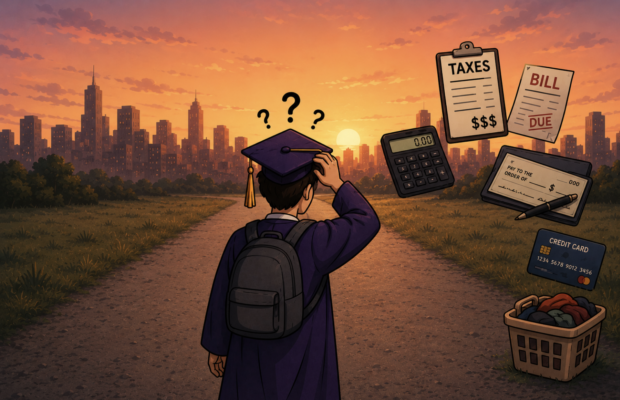
Most students can solve for x, write a five-paragraph essay and explain what caused World War I, but if you ask them how to file taxes or write a check, suddenly it’s like the Wi-Fi went out.
For years, students sit through dozens of classes, take hundreds of tests and work towards one goal: graduation, but once that diploma is in their hands, a new question seems to feel a lot more real: are they actually ready for life?
At Cedar Falls High School, students are required to take a financial literacy class before graduating. This is supposed to be something meant to prepare them for real-world responsibilities. In theory, students should be walking out of school knowing how to budget, understand credit and maybe even survive tax season.
In reality, though … it’s a little more complicated.
Students said they only feel “somewhat” prepared or not prepared at all for life after high school. While some point out skills like time management, communication and handling stress as things that school has taught them (and yes, surviving group projects probably counts), many said that there is still a big gap when it comes to applying those skills in real life.
Financial skills, even though they are taught in school, are still one of the biggest concerns among students.
“If I had to move out right now, I would have no idea how to do taxes and budget for a house or even write a check,” sophomore Sophie Dralle said.
Other students agreed, saying that even though the concepts might be introduced, they don’t feel confident actually using them, kind of like learning something new for a test, then immediately forgetting it the second you turn it in.
Senior Kael Moore said, “It is something that everyone will do in their life and should learn it beforehand, not while they are doing it.”
This brings up a really important question: if students are required to take financial literacy, why do so many students still feel so unprepared?
For some students, it’s based completely on experience. Learning about budgeting in a classroom is very different from staring at your bank account and realizing your paycheck is already gone. Others say that the issue is holding onto that information because even though it’s taught once, it might not stick by the time it’s actually needed (which is unfortunately not right after the unit test).
Still, the majority of students agree that life skills should be a priority in education. Some said schools should be required to teach skills like budgeting, taxes, credit and more, not just briefly, but in ways that actually feel useful outside of the classroom.
Regarding if he knew the basics about finance, sophomore Brendon Seidel said, “I do, but I know others won’t have that same experience as me, and some just aren’t ready for it.”
And others were more direct by simply saying they know nothing financially.
While seeing the students’ perspectives shows an obvious gap, teachers are able to show more insight into this topic. Social Studies teacher Chad Van Cleve said that he thinks schools do provide sufficient opportunities for students to develop certain life skills, but there are always limitations.
“Schools provide opportunities for students to develop skills and explore what they can do. There are so many needs,” Van Cleve said, “that sometimes create schedules that are too full for greater life skills exploration.”
With required courses, testing standards and often limited time, schools have to balance a wide range of priorities. Even with required classes like financial literacy, it can be hard to actually prepare students for every real-world situation that they might face, especially when “real life” doesn’t come with a study guide.
Either way, the disconnect between school and real life is hard to ignore.
Students are taking classes. Lessons are being taught, but for most students, the confidence isn’t there.
While students might graduate knowing how to write essays and solve equations, many are still clueless about how to navigate the many realities and expectations of adulthood, and as graduation gets closer, that uncertainty starts to feel a lot less like a joke and a lot more like something that truly matters.
After all, the real test in life might not be on paper. It might be everything that comes after graduation. No calculator. No retakes. And definitely no extra credit.
You may also like...


-
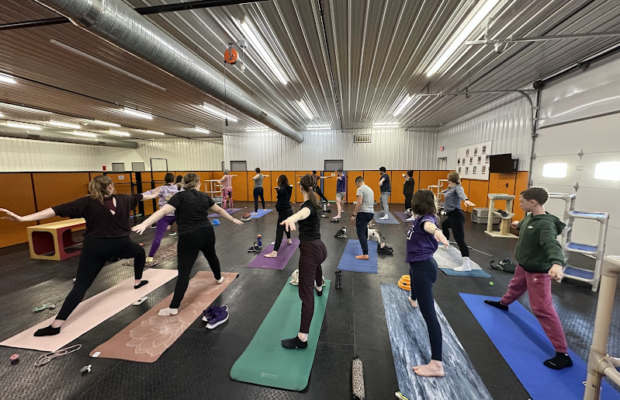
Cedar Bend hosts successful cat yoga event
The Humane Society hosted an event last weekend on Saturday, May 2 for cat yoga at the Outreach and Education Center. There were many participants who showed up for...


You must be logged in to post a comment Login